
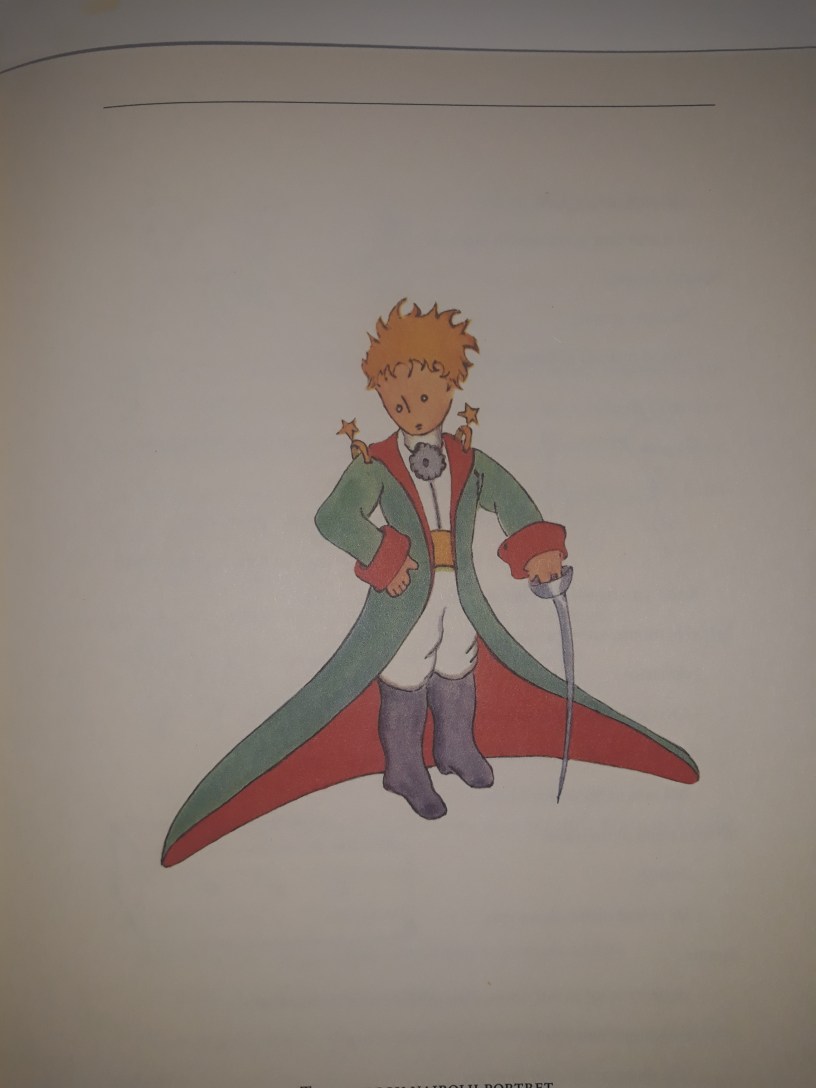
“The Little Prince” was written by a French author called Antoine de Saint-Exupéry in 1943. The book was written as if it were a children’s book, but it has always been so much more. The book can be interpreted in multiple ways and conveys dozens of small secret messages hidden between the lines to all adults. So what is the story about?
The story begins with a pilot crash-landing in the Sahara Desert and we are told that he quickly has to repair his plane before he runs out of water. There, in the Sahara Desert, the pilot meets a little boy who is called “The Little Prince”. The prince is from a different planet, and while the pilot is trying to repair his plane, the little prince keeps him company and tells the pilot about his travels to different planets.
The book is befitting nearly all ages. Unlike most books, this book does not have a targeted age group; it is targeted to the general public. However, there is an age when the book is not an appreciated read. Let me explain!
By very young children, the book is usually seen as a cute story where a boy experiences cool adventures in space and thinks that adults are weird. Any child can relate to these ideas. While most children are too young to read between the lines and interpret its “true meaning”, the book is still written in a language and has the plot that the young children can enjoy immensely. For them, the book is highly relatable while the little prince is their age and, guided by his childish innocence, he narrates what he experiences in words of a little boy, which in turn, the children interpret as exciting adventures.
“a boy experiences cool adventures in space and thinks that adults are weird. Any child can relate to these ideas”
Conversely, during the first years of adolescence this book might get a few strange reactions from teenagers. The story is still entertaining, but it lacks a coherence, the purpose of the little prince’s stories are not clear and therefore you start wondering about why he mentions all these travels. You are too old to enjoy the simplicity of the story and too young to understand the philosophy behind it. This is the gap that I am talking about. The early adolescence is the age when readers are old enough to understand that the story is more than just colorful images and small adventures, but also too young to understand and appreciate the metaphors that convey the small messages, such as enjoying the simple things in life and learning humble life lessons
“It is an inspiring story about growth, understanding and genuinely important human values.”
Then, there comes the age group that can truly appreciate the book the most, those who are in the later stages of adolescence and the adults. They are old and wise enough to understand and interpret the metaphors that this book is riddled with and understand that it is an inspiring story about growth, understanding and genuinely important human values. It is an invigorating life philosophy written in words understandable even to small children. No wonder, that at this age, this book once again becomes an outstanding reading experience
To summarize, saying that the book is for all ages might not be entirely true. Those who feel that they do not completely grasp the concept of metaphors might want to wait a little before giving this book a read.
“It is tremendously encouraging and very inspiring”.
Personally, I thought the book was a bit strange the first time I read it, but after hearing people talk about how inspiring they found it, I thought: “What are they talking about? I don’t remember it to be anything special… Maybe I should read it again to make sure”. And sure enough, I started understanding what all the fuss was about. I recommend you reading this book if you ever feel like you need a boost or even just a push in a positive direction. It is tremendously encouraging and very inspiring. It is also a good book to read as a bedtime story to your kids or your younger siblings.
So get a cup of tea and if you have an opportunity, find a comfortable armchair, and start reading this book because you will never regret picking it up.
Written by Cornelia Såthe
 News for YOUth
Ozana Margotić 3.g
I really like the way the book is described in this article. It was very interesting to read how people with different age see the story in a different way. I enjoyed the book myself so I’m glad someone wrote an article about it.
LikeLike
As a person that has read The Little Prince multiple times, I have to agree that your mentality and view on the world changes as you read the book throughout the years.
I started reading The Little Prince since I was 9 years old, and have been reading it every couple of years. Last time I read it, my experience of it completely changed. By seeing this article, it has motivated me to read it once again and self-reflect on myself.
Mihael Cikač 3.g
LikeLike
This article offers a thoughtful reflection on how The Little Prince can be understood differently at various ages and why it remains meaningful for both children and adults. The author nicely connects the book’s simple fairy‑tale form with deeper themes like loneliness, friendship, and the importance of looking beneath the surface, which encourages readers to return to the story and think about their own lives.
Barbara Vađunec, 4.f
LikeLike
I really admire the way this book connects different age groups as children see adventure, young adolescents might feel puzzled and adults rediscover the beauty of simplicity. The timeless quality is what really keeps this book relevant for generations.
Andrej Martinez 4. F
LikeLike
Le Petit Prince is a tale I hold dear to my heart. Once you fully grasp the subtle messages and all the metaphorical descriptions, the story takes a massive leap forward. The nostalgic book we all read as children becomes a true guide on how to live.
This article beautifully points out the differences in how the story is experienced at various stages through life. That being said, I’d argue that the general tone, overly praises the adults experience. It feels as though the author is trying to “belittle” the impact the Prince has on young children as he says: “Then, there comes the age group that can truly appreciate the book the most, those who are in the later stages of adolescence and the adults”. While adults can understand complex metaphors, they are oftentimes barred from experiencing this epic through the eyes of innocent, carefree children. And this, at least for me, stands equally important as those life altering metaphors.
So to conclude, the article brings deserved attention to the timeless classic, which I appreciate even though I don’t agree entirely with all the points.
Maksim Tušek, 4.f
LikeLike