
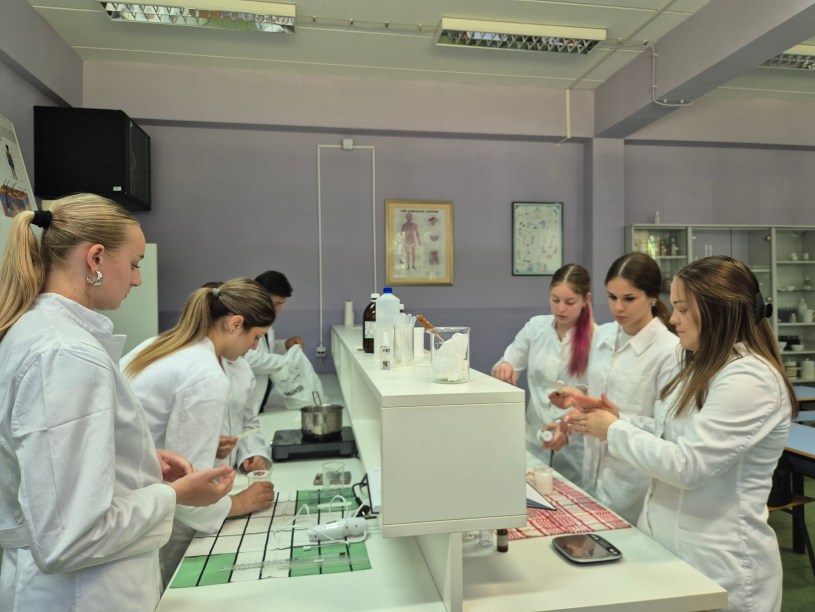
Natural skincare has become increasingly popular in recent years as more people look for products made from plant-based ingredients rather than synthetic chemicals. Six cosmetology students and their chemistry teacher from the Vocational School in Varaždin (Srednja strukovna škola Varaždin, Croatia) shared their experiences with creating natural cosmetic products and explained why they believe natural skincare can be beneficial for the skin.
Natural cosmetic products one-o-one
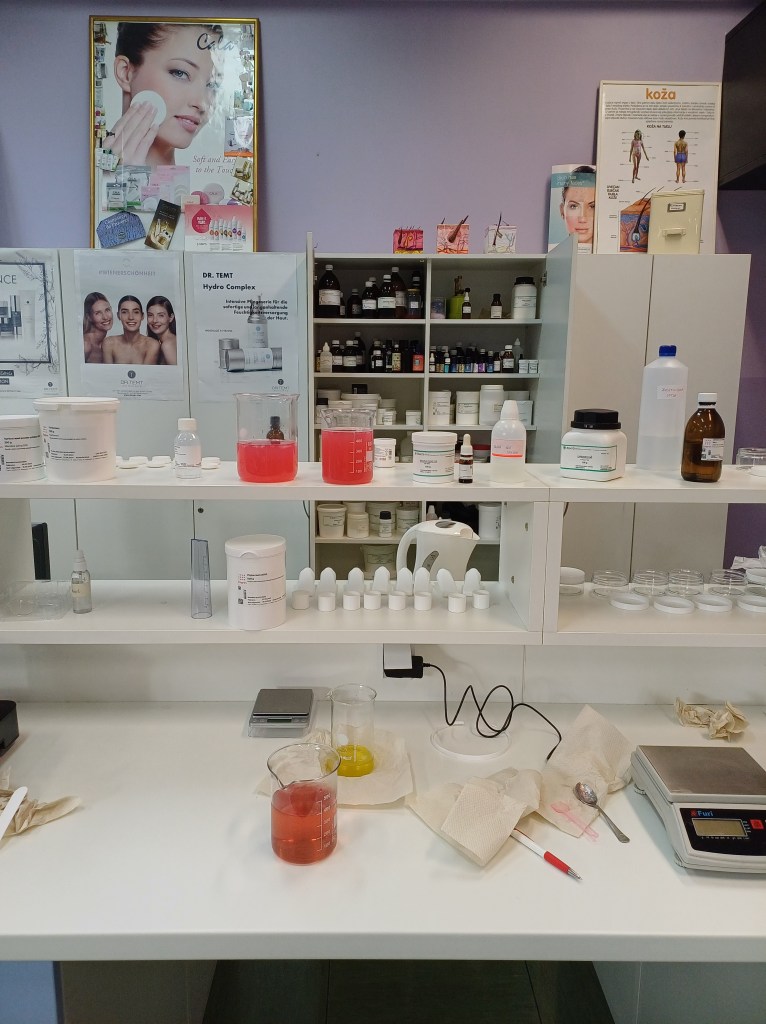
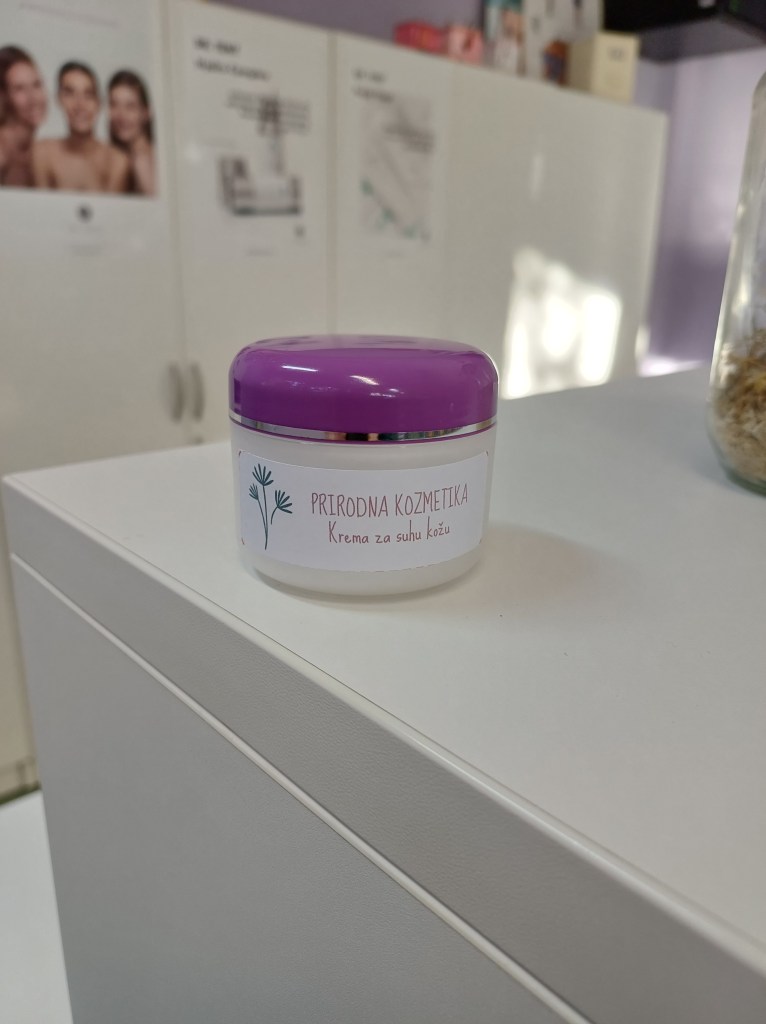
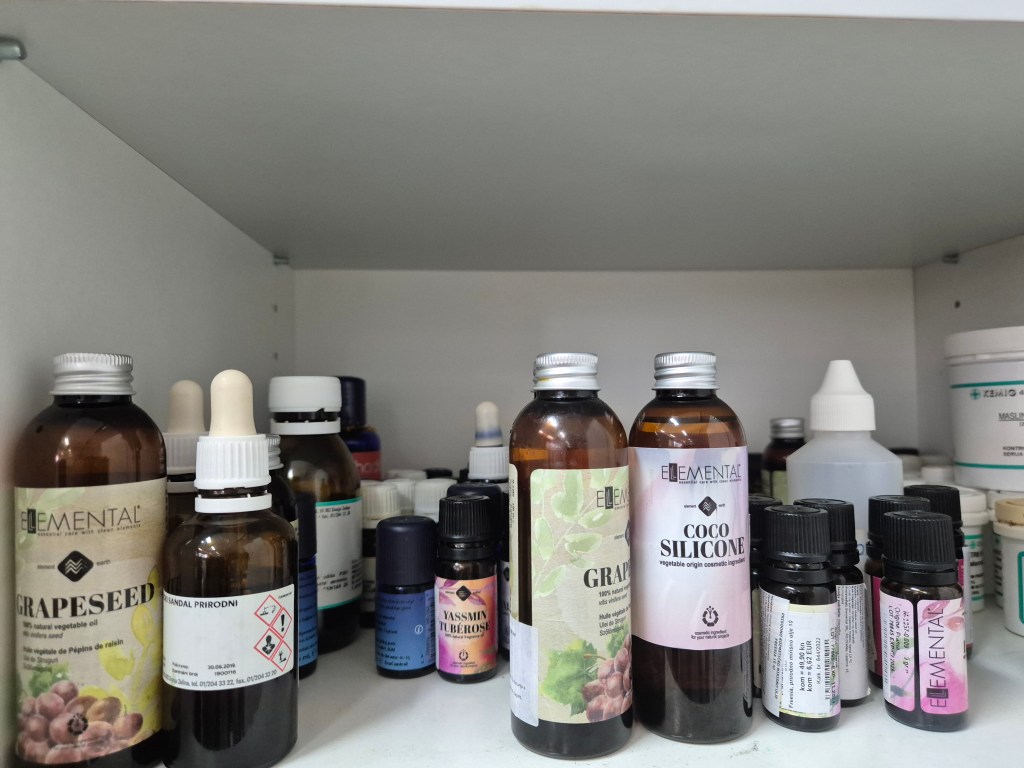
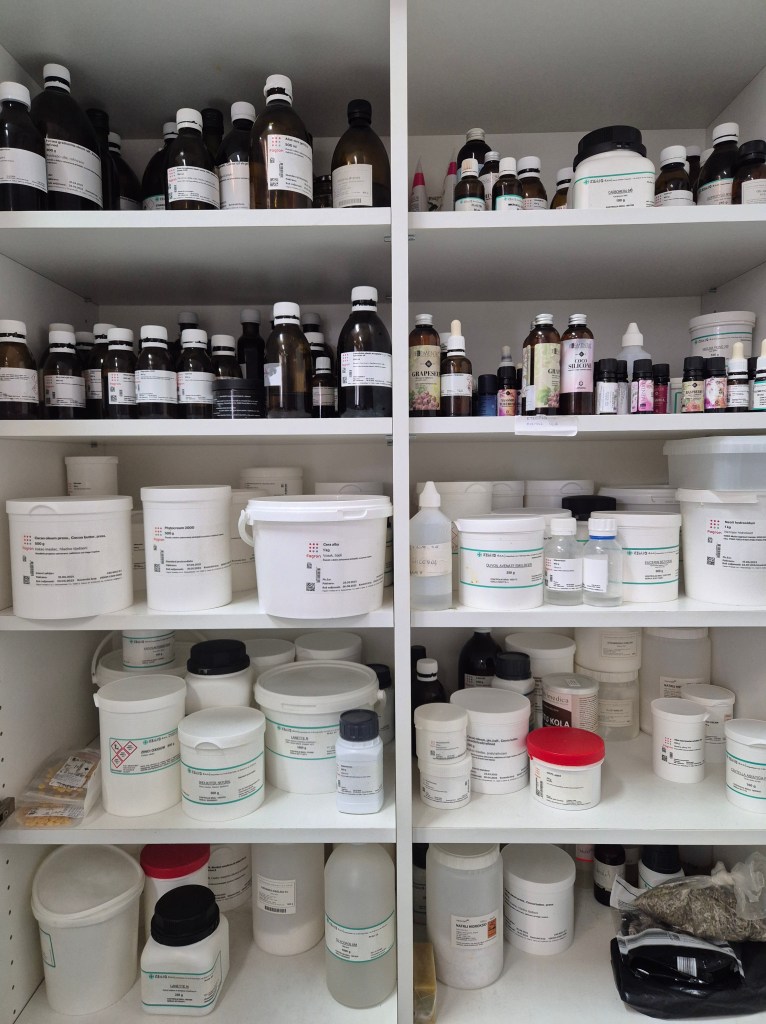
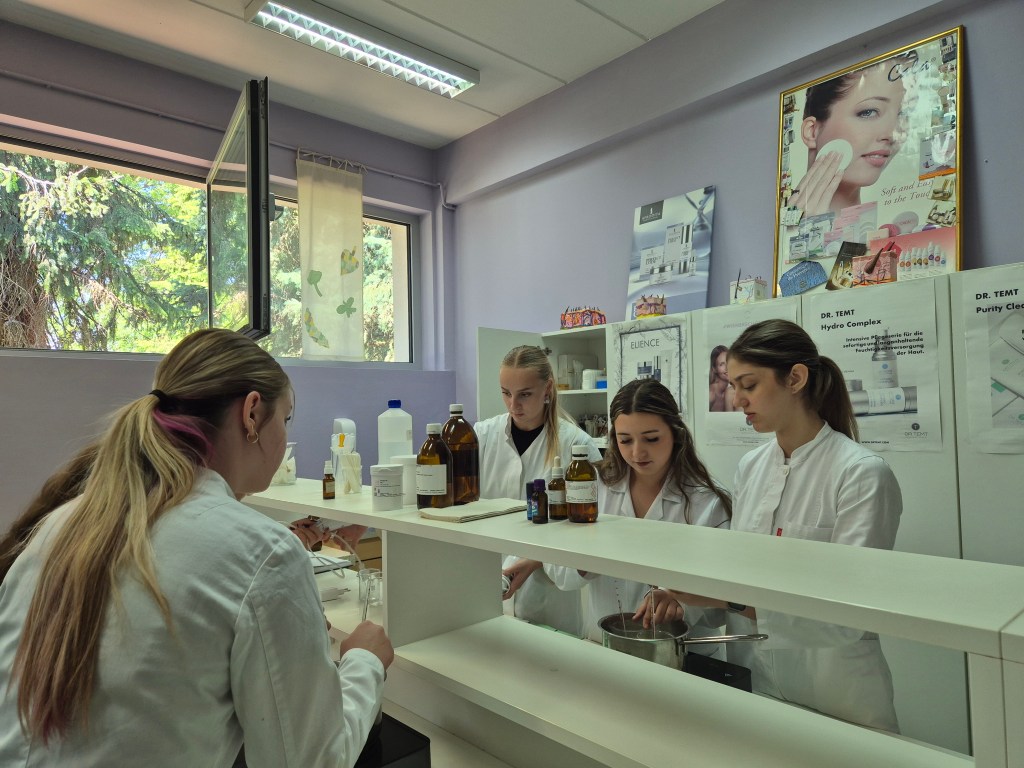
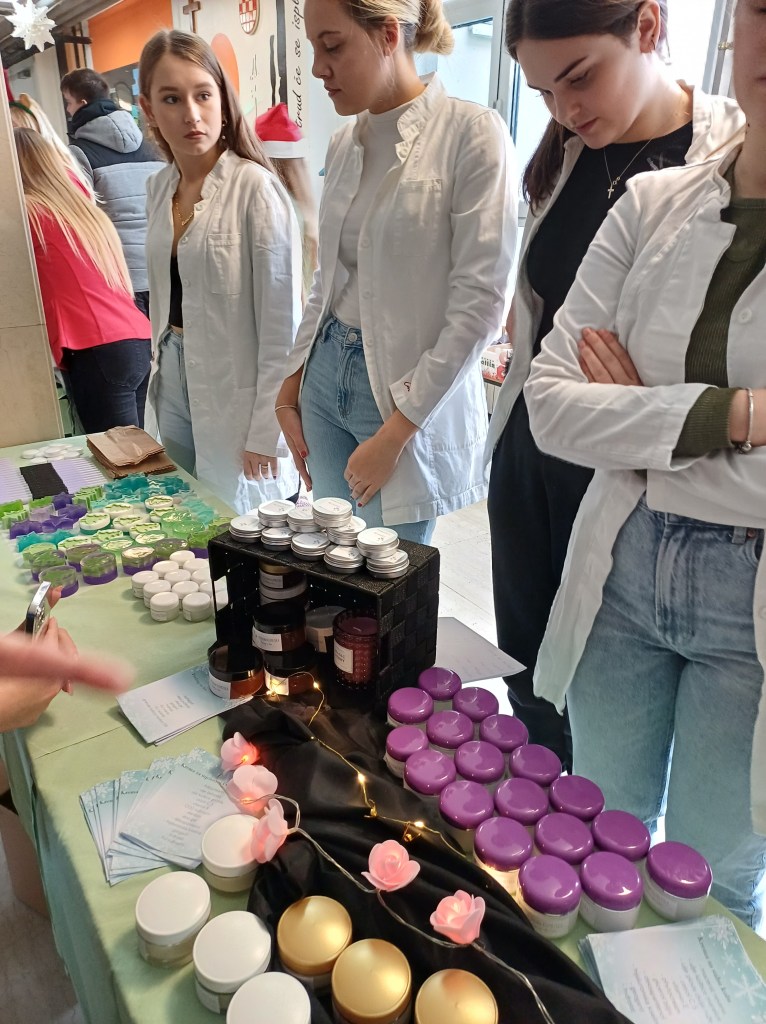
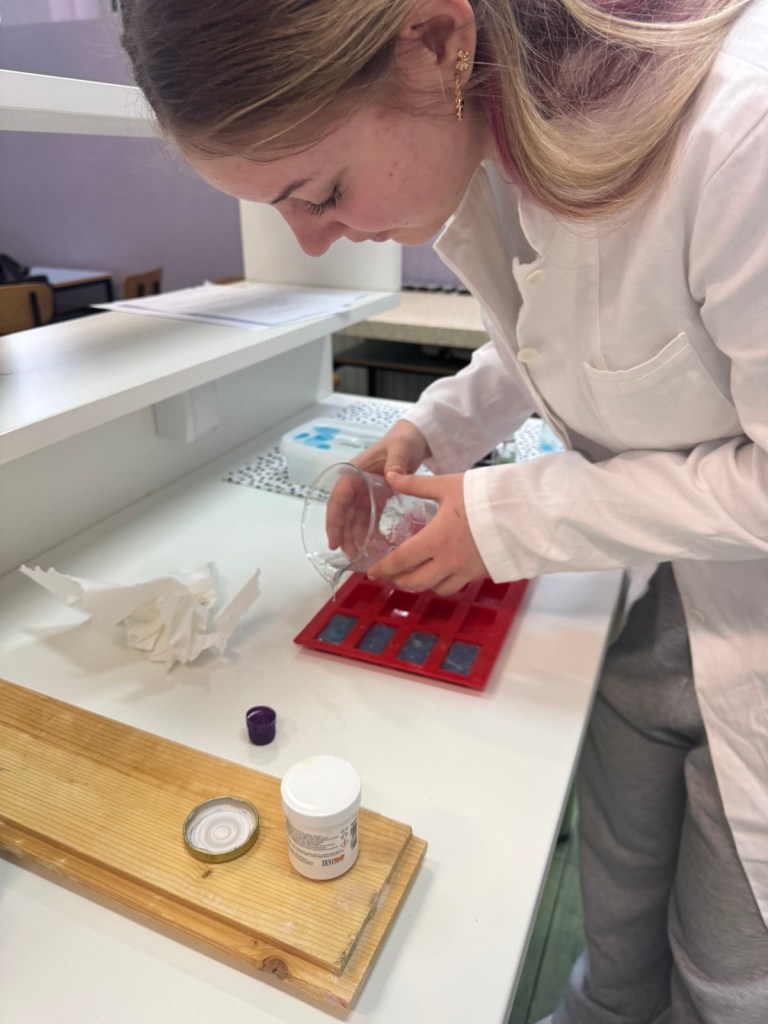
At the Vocational School Varaždin future estheticians, students who attend a cosmetology course, have an opportunity to learn more about natural skin products in a special subject called Natural cosmetics, taught by Chemistry teacher, Milan Radunković. Apart from acquiring theoretical knowledge, cosmetology students also practice making a wide range of natural skin care products. All of the products made in the school laboratory are based on natural ingredients that meet strict cosmetic standards, COSMOS-standards. Instead of relying on synthetic substances, cosmetology students use approved natural raw materials such as cold-pressed oils, hydrolats, essential oils, and natural extracts. These ingredients are carefully selected depending on the type of product being created, whether it is a cream, balm, soap, or another skincare product.

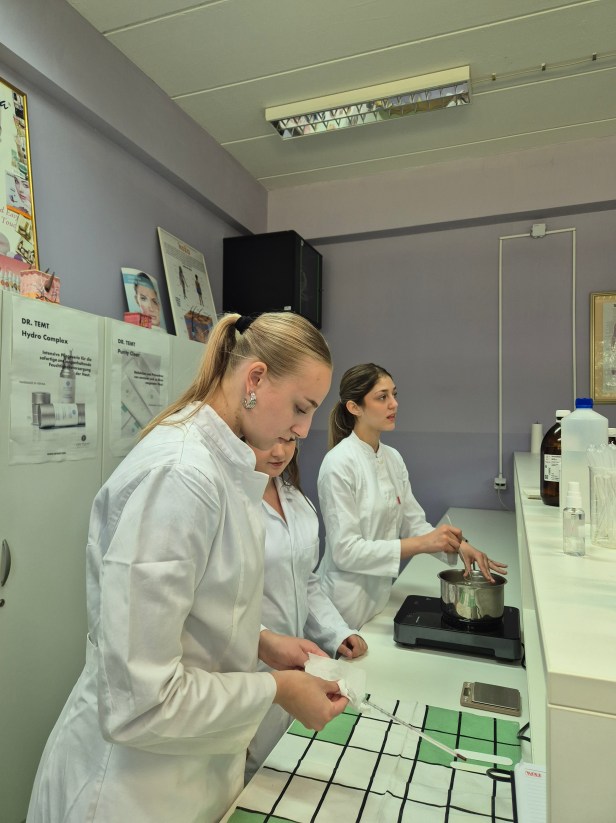
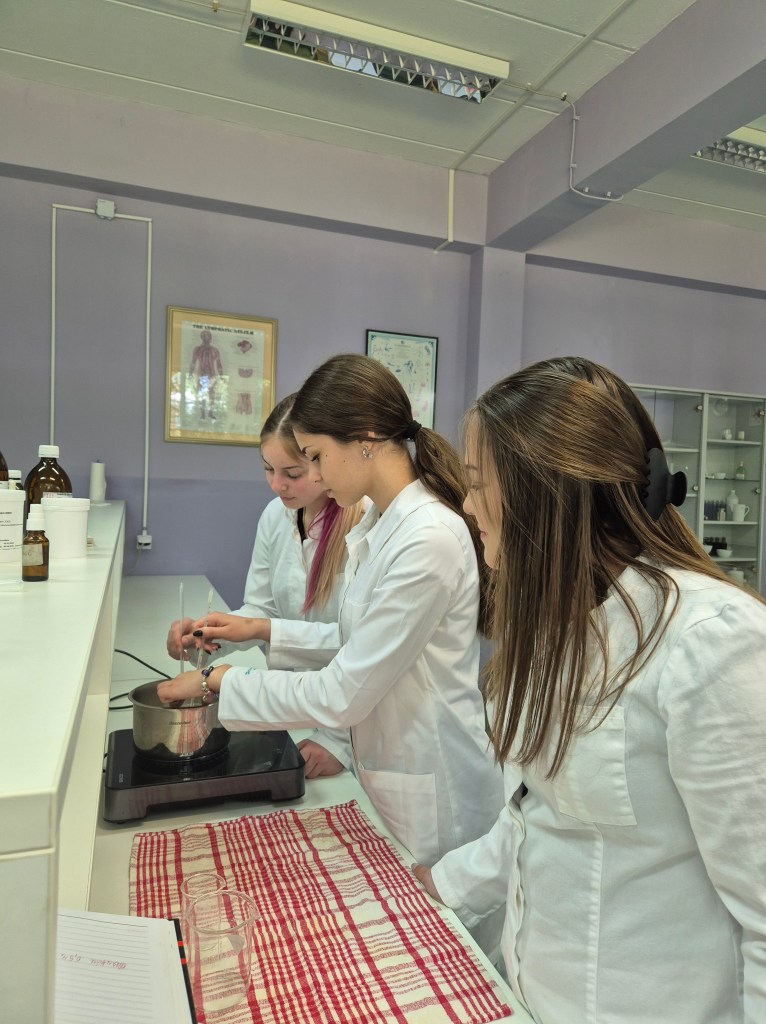
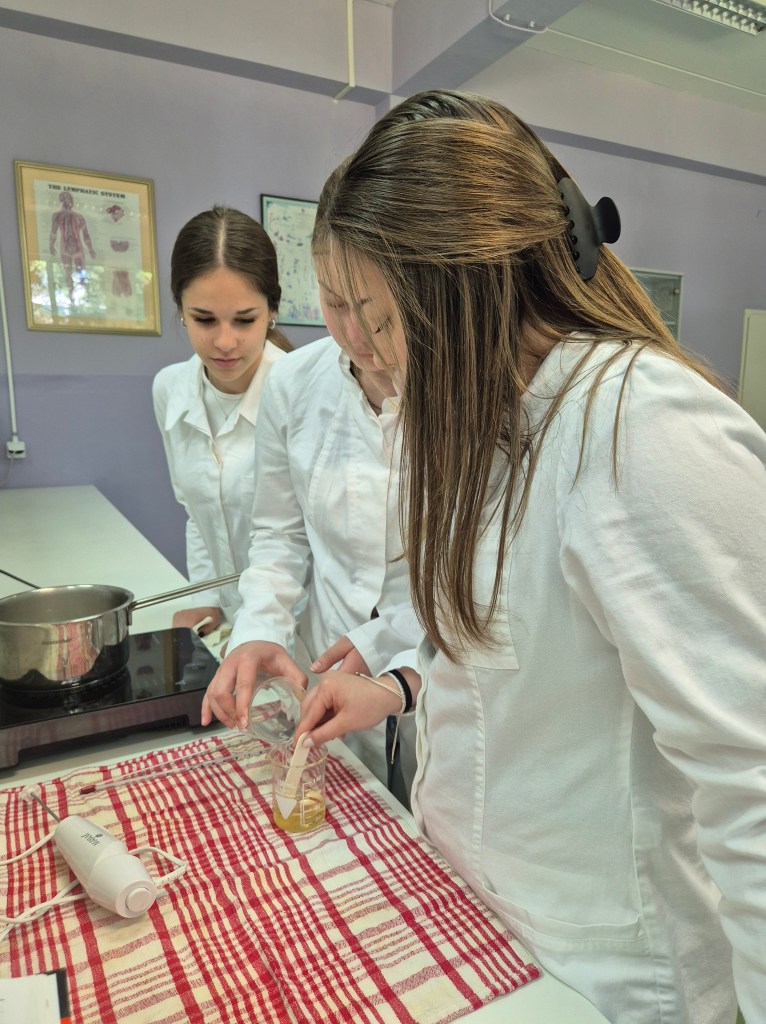
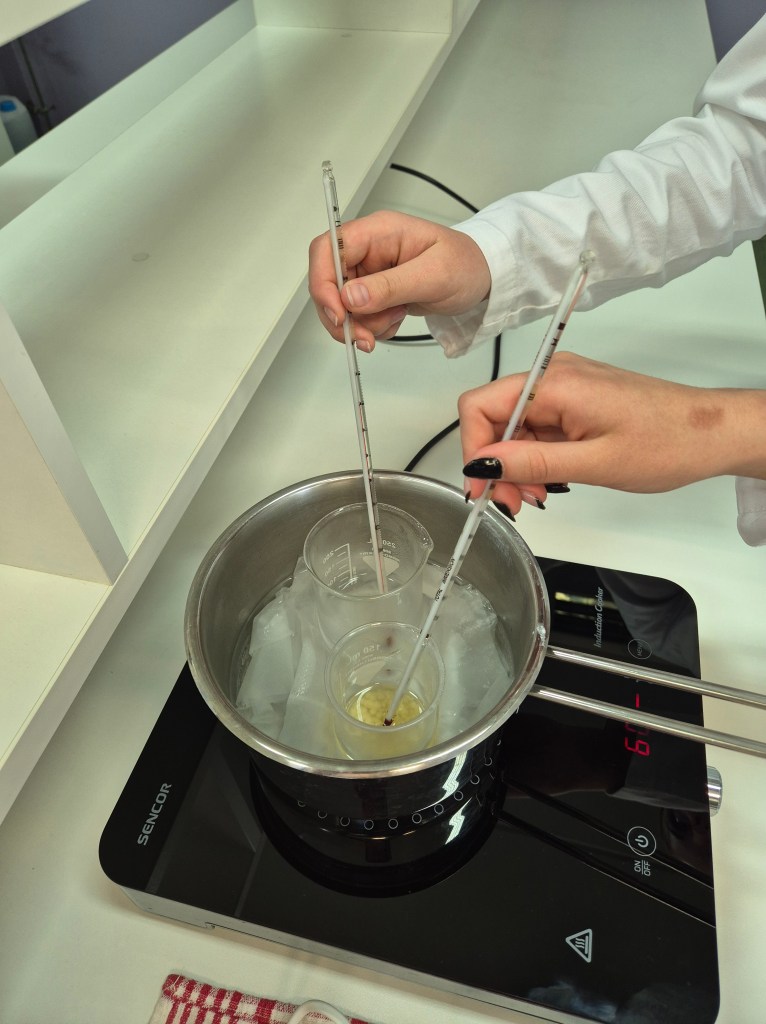
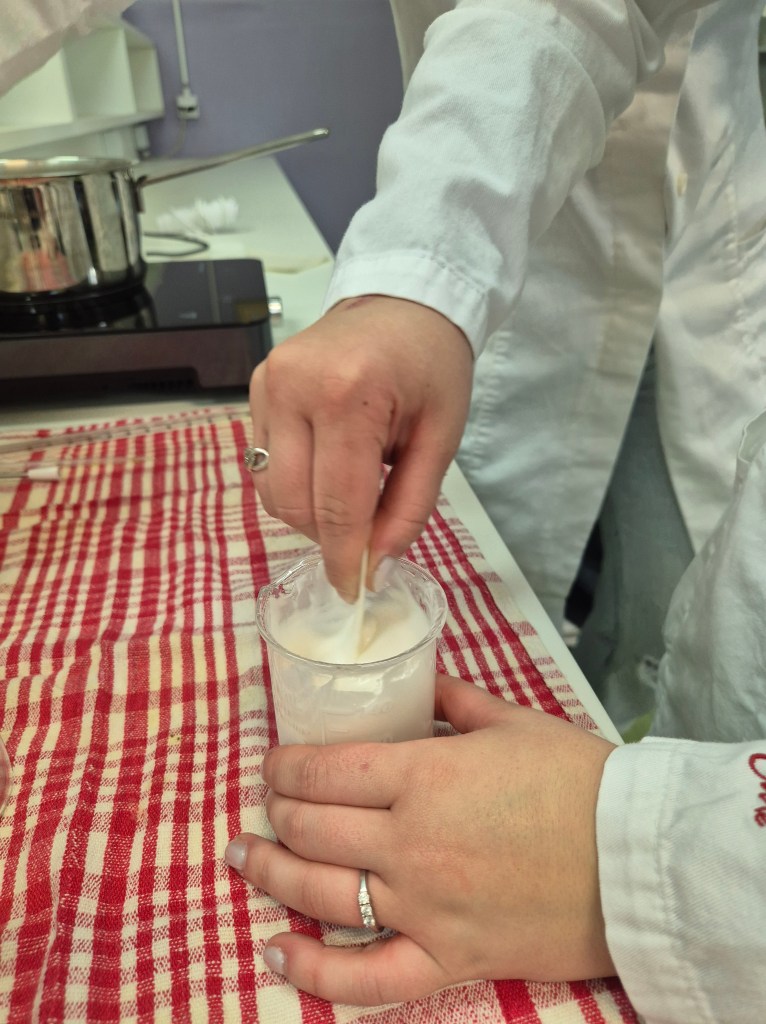
Cosmetology students Lana, Emily, Marta, Paola, Dora and Ena in the cosmetology lab, making a hydrating cream basd on almond oil. Credits: newsforYOUth
The production process follows strict hygiene standards as well. Students use laboratory equipment such as beakers, thermometers, and grinders to prepare ingredients, while all tools and work surfaces are carefully disinfected before and after production. Many of the products created in the laboratory can be used on sensitive skin, although reactions may vary depending on the ingredients and the individual.

In the interview students also highlighted some concerns about conventional cosmetics. Commercial products frequently contain artificial fragrances and colorants that make products more attractive to consumers but do not necessarily improve their effectiveness. Natural cosmetics generally avoid such additives and instead rely on essential oils and plant-based ingredients. The students explained that many natural ingredients have strong properties of their own, even if they do not always have the pleasant scents people expect.
Quality over speed
According to the students, one of the main differences between natural and conventional cosmetics is the way results appear. Synthetic products often provide immediate visible effects, while natural cosmetics usually work more gradually. Rather than creating a temporary appearance of improvement, natural ingredients aim to nourish and support the skin over time.
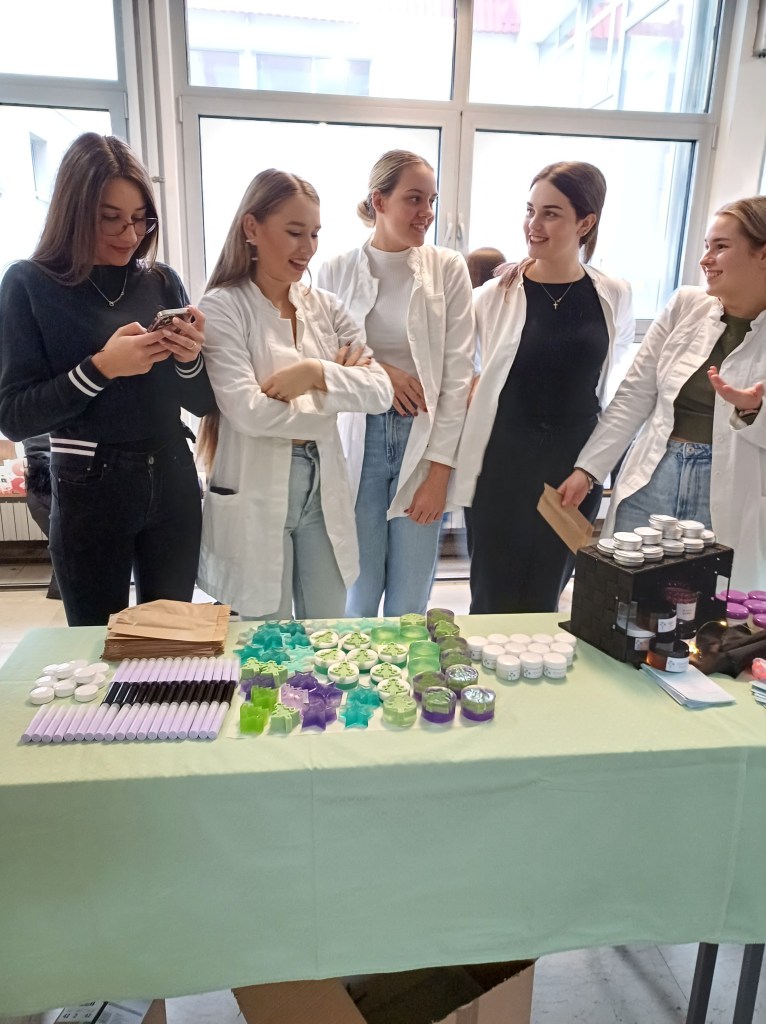
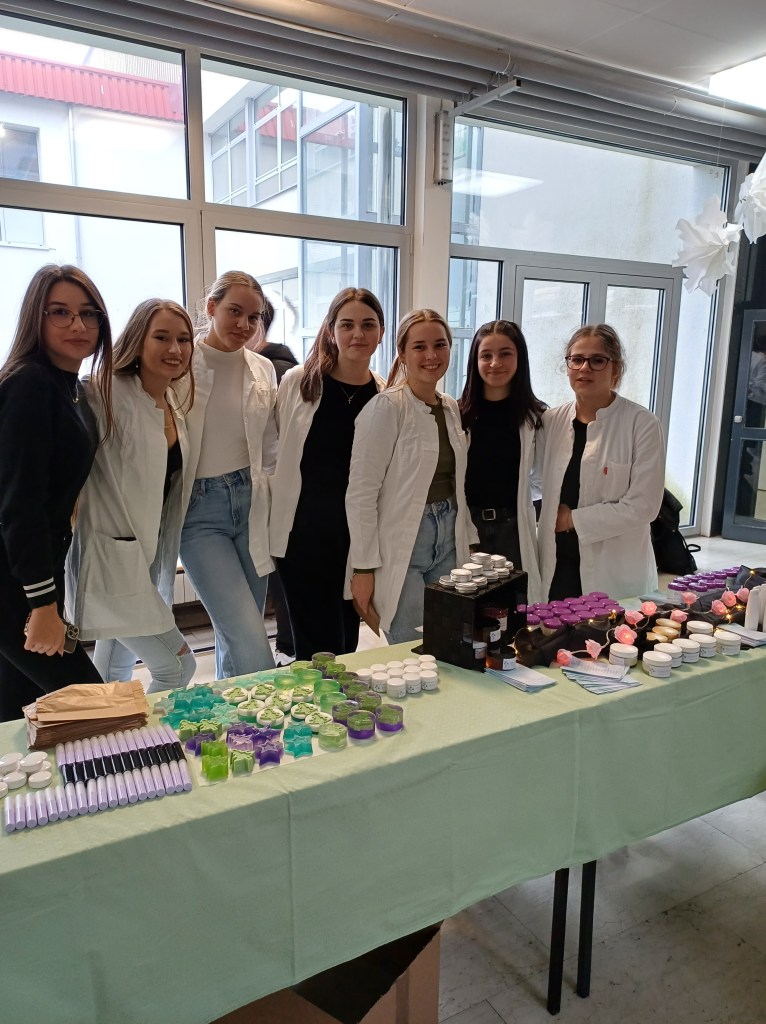
However, the effectiveness of skincare products can differ from person to person. One student described how a lip balm that worked well for some classmates did not produce noticeable results for her. This demonstrates an important principle in skincare: every person’s skin is unique, and no single product works perfectly for everyone.
Knowledge is power
The discussion also explored the role of smaller producers and homemade cosmetics. The participants agreed that products made by knowledgeable individuals who carefully select their ingredients can sometimes be just as good as, or even better than, mass-produced alternatives. They emphasized that quality depends not only on the number of ingredients but also on understanding their purpose and how they work together.
“The rule “less is more” is one of the most important principles of quality cosmetic products, especially in natural skin care products.”
Lana Mikulčić, cosmetology student
Sun protection was another important topic. The students explained that many people automatically choose SPF 50 sunscreen, believing it provides dramatically better protection than SPF 30. In reality, the difference in protection is relatively small, often only a few percentage points, despite the higher price. They also noted that certain natural ingredients, such as zinc oxide, can be used in natural sunscreens to provide protection against harmful UV rays. Another natural product than can be used as a sunscreen is coconut oil, which is a great option for short periods of sun exposure.
Estheticians’ expert advice
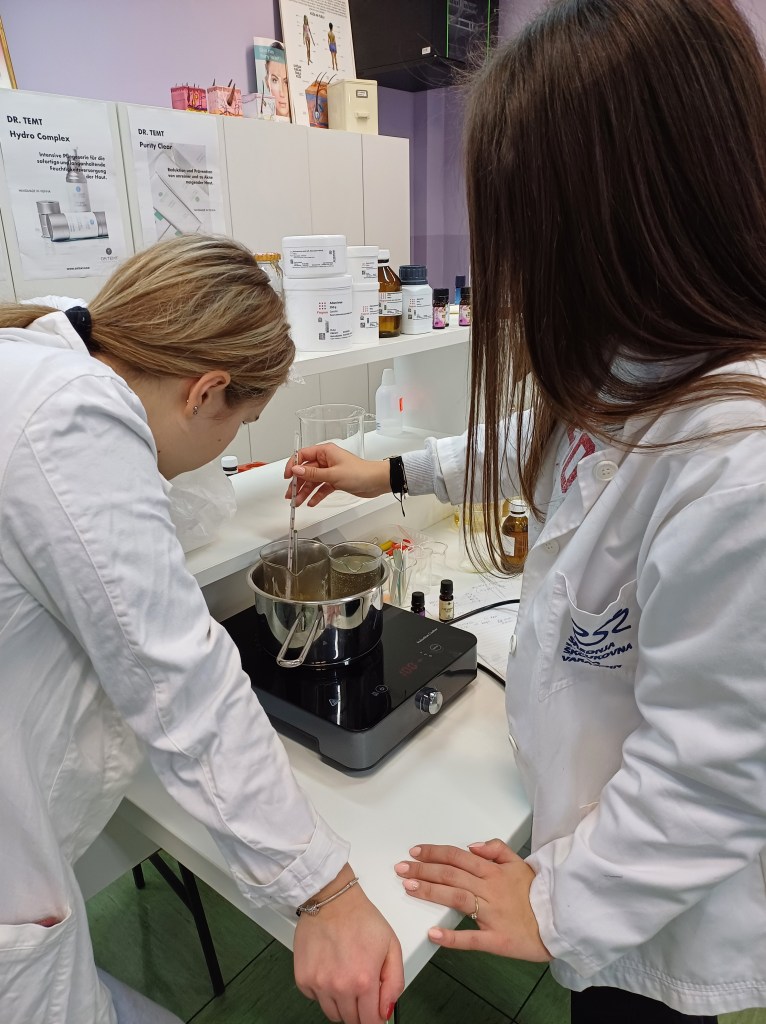
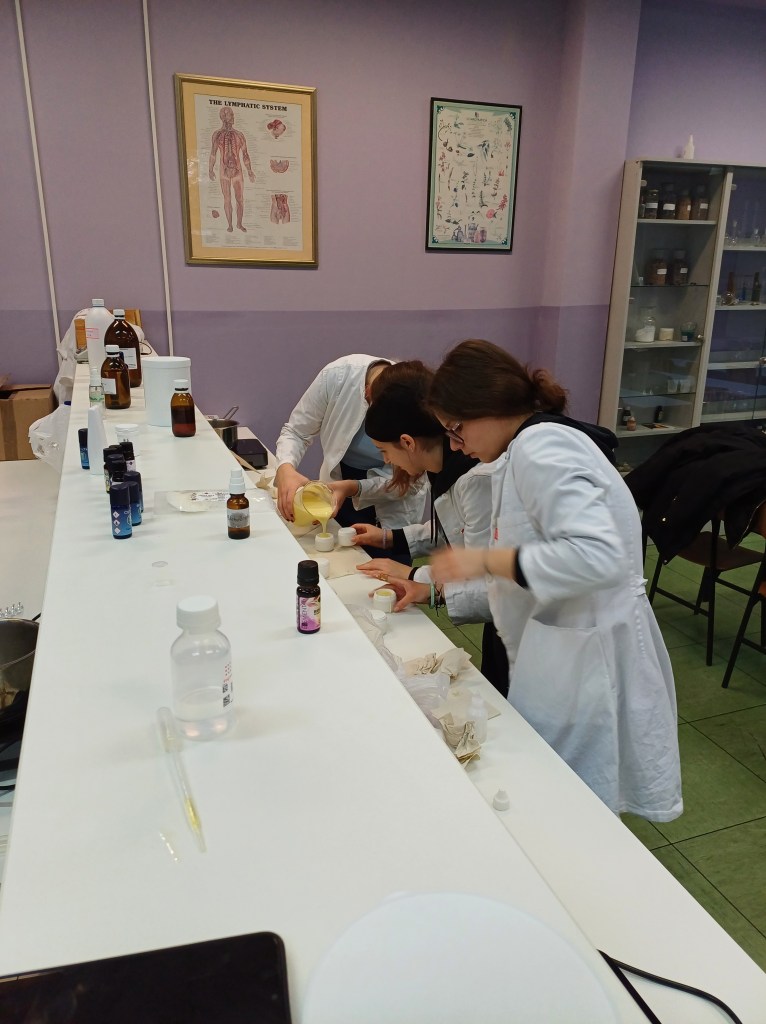
Throughout four-year education at the Vocational school, students in the cosmetology program gain both theoretical and practical knowledge and become a knowledgeable experts on skin care. They study anatomy, cosmetology, skincare ingredients, and massage techniques, while also spending time in salons and practical training sessions. Many of them enjoy the practical lessons the most because they can immediately apply what they learn in the classroom.
“Becoming an esthetician has been my dream since I was a little girl and attending the Vocational School made me even more passionate about this job because cosmetology programme provides the right balance between theory and practical experience. “
Emily Ivanović, cosmetology student
When discussing skincare routines, the students recommended keeping things simple. For people who wear makeup, they suggested first removing it with micellar water or an oil-based cleanser. This can be followed by a toner to balance the skin’s pH, a moisturizer, and daily sun protection. They also recommended gentle exfoliation every one or two weeks, depending on skin type.
One homemade skincare recipe they shared was a simple natural exfoliating scrub made from sugar, honey, and lemon juice. The ingredients are mixed together and gently applied to the skin. According to the students, the scrub can leave the skin feeling smoother and more even in appearance.
Homemade honey-lemon exfoliating scrub recipe (for 100g)
- brown sugar 55g
- white sugar 20 g
- honey 15 g
- sweet almond oil 7g / 7.5 ml
- vitamin E 0.5g (0.5 ml)
- lavandel oil 1ml or 20 drops
- sweet orange oil 1ml or 20 drops
- Coenzyme Q10 0.5 g
Mix all the ingredients and use once a week.
Final verdict on natural and conventional cosmetics
The interview concluded with a comparison between natural and conventional cosmetics. Natural products often use cold-pressed oils, hydrolats, essential oils, and eco-friendly preservatives, while conventional cosmetics frequently contain refined oils, mineral-based ingredients, synthetic fragrances, and artificial colors. Nevertheless, the teacher emphasized that even natural products require proper preservation. Without suitable preservatives, harmful microorganisms can develop, making the product unsafe. For this reason, responsible natural skincare manufacturers use approved eco-preservatives to ensure both safety and quality.
“The greatest advantage of natural skin care products is that we use only natural ingredients and completely avoid any synthetic chemicals that could have harmful effect on skin.”
Marta Jurčević, cosmetology student
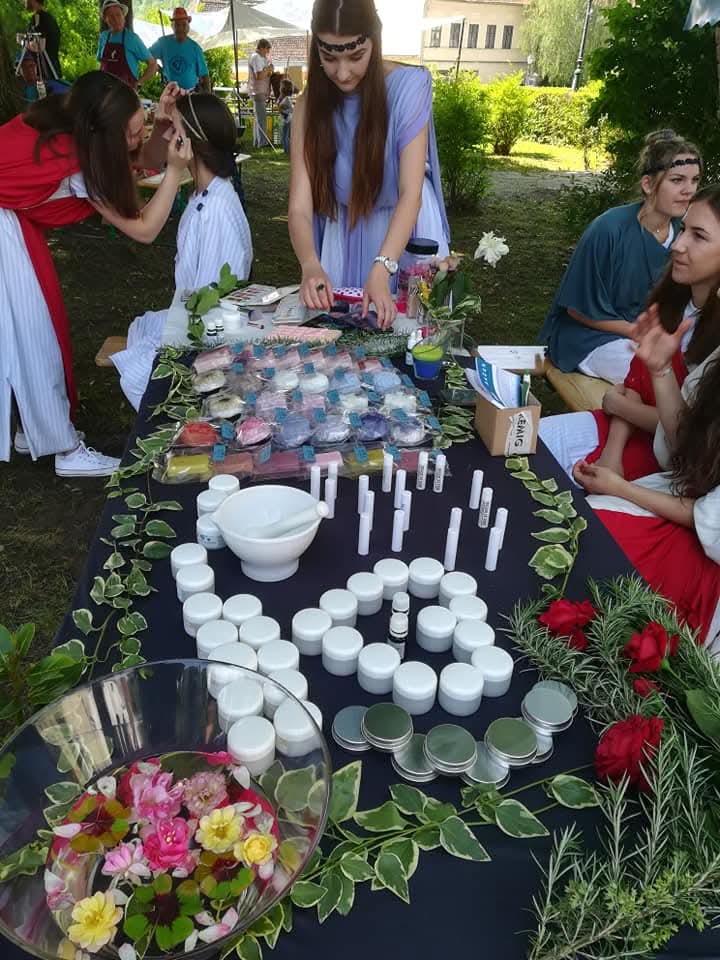
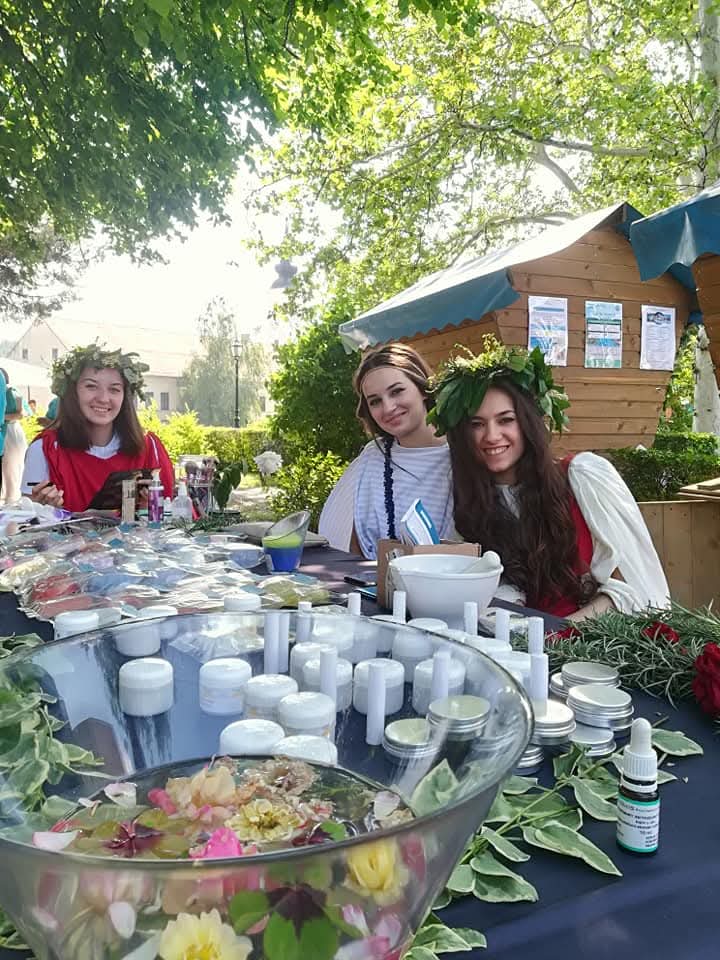
Overall, the students and teachers agreed that natural skincare offers a more nourishing and long-term approach to skin health. While results may not appear immediately, many people appreciate the focus on natural ingredients, gentle care, and supporting the skin’s natural balance.
Written by Helena Mlinarić
Edited by Kaja Zavrtnik

